

After a concussion, the brain needs time to recover. One of the most difficult parts of that recovery, and one that can drag on for weeks or months, is light sensitivity. Normal indoor lighting can feel overwhelming. Fluorescent lights in supermarkets or offices can be disabling. Screens become almost impossible to tolerate.
This is not unusual. Studies suggest that photophobia affects around 50 to 80 per cent of people after a concussion, and in some patients it persists long after other symptoms have resolved. It is also one of the most treatable aspects of post-concussion syndrome from an optometry perspective.
Why light hurts after a concussion
A concussion disrupts the normal function of neurons across several brain regions, including those involved in visual processing. The pathways that carry signals from light-sensitive cells in the retina to the brain become hyperactive: more sensitive than normal to stimulation, and slower to adapt to changing light levels.
The blue-green wavelengths of light (around 480 to 520nm) are particularly problematic. These wavelengths activate a group of specialised retinal cells that project directly to pain-processing centres in the brain. In a post-concussion brain, this already-sensitised system responds to normal light levels as if they were painful, which is exactly what patients experience.
What FL-41 lenses do
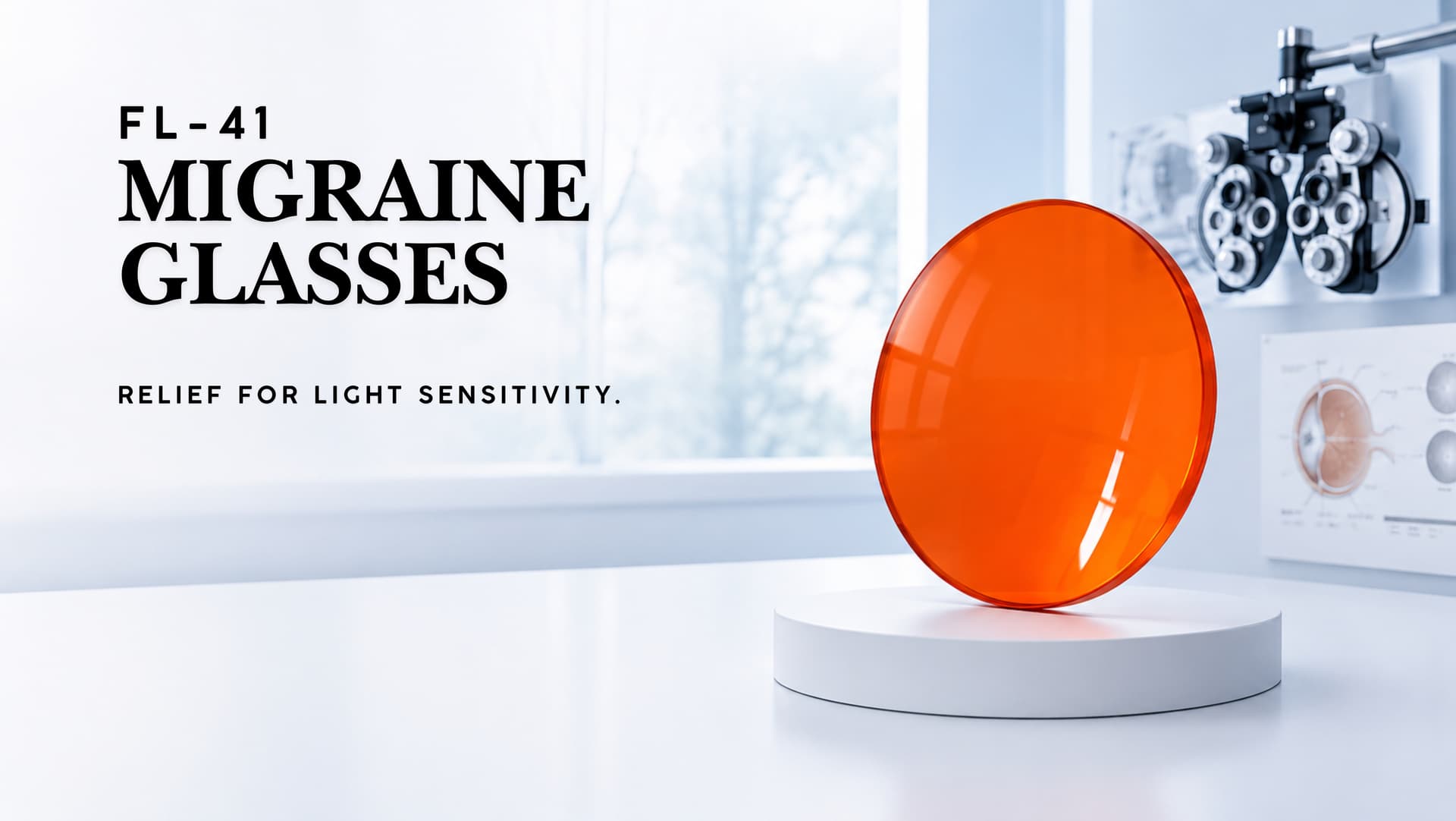
FL-41 is a rose-amber tinted lens that filters the blue-green wavelengths that are most strongly associated with photophobia. By blocking this specific spectral range, FL-41 reduces the stimulus reaching the sensitised pain pathways, making light more tolerable without requiring the patient to stay in the dark.
The evidence for FL-41 in post-concussion photophobia is well established. Studies in patients with persistent post-concussion symptoms have found that FL-41 tinted lenses significantly reduce self-reported light sensitivity and headache frequency. Patients are able to return to screen use and normal environments sooner than those who use standard dark sunglasses, which can paradoxically worsen sensitivity over time by preventing the visual system from adapting.
Why standard sunglasses are not the answer
Many post-concussion patients instinctively reach for dark sunglasses indoors. While this provides short-term relief, wearing very dark lenses indoors over an extended period can cause the visual system to become even more sensitive to normal light, a process called dark adaptation. The brain lowers its threshold in response to consistently low light input, making the eventual return to normal lighting even harder.
FL-41 lenses are a middle ground. They filter the specific harmful wavelengths while still allowing the visual system to receive enough stimulation to remain properly calibrated.
What to expect at a consultation
At Prime Optometrists Auburn, a post-concussion assessment covers your full prescription, binocular vision function (often disrupted after a head injury), light sensitivity levels, and suitability for FL-41 lenses. We can also identify any other visual sequelae of the concussion that may be contributing to your symptoms.
Post-concussion patients from anywhere in Australia can now order FL-41 glasses online from our practice, without needing to visit the clinic first. Prescription and non-prescription options are available. Prescription orders are reviewed by Dr Tahiri before dispatch, and standard delivery is free.
See our FL-41 glasses onlineWe see patients from Auburn, Berala, Lidcombe, Granville, Merrylands, Parramatta, Westmead, Strathfield, Burwood, Concord, Homebush, Ryde, and across Western and Northern Western Sydney. Book online or call (02) 9761 0005. We are at 43 Auburn Road, Auburn NSW 2144.