

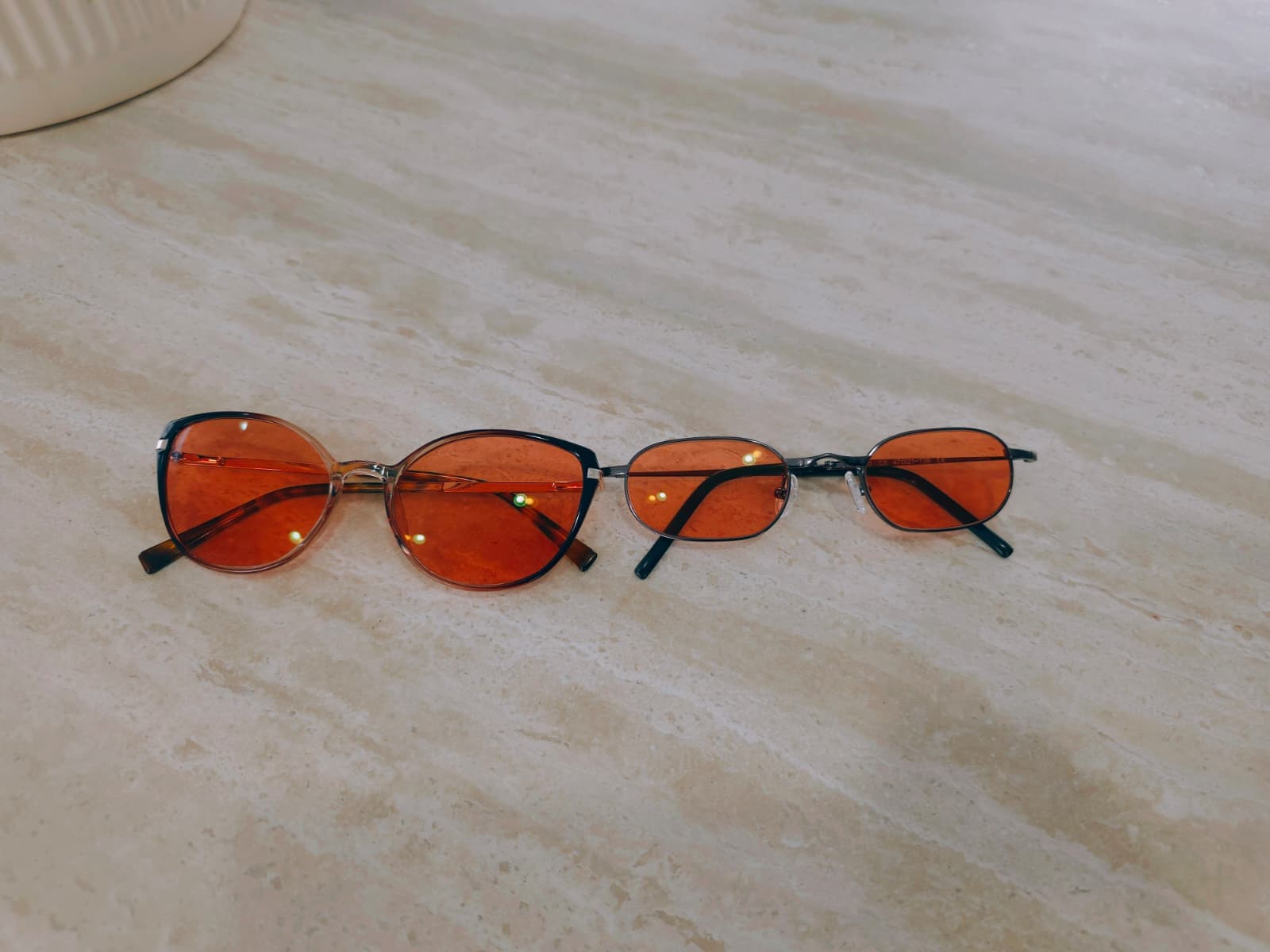
Photophobia, or light sensitivity, is one of the most common and disabling symptoms associated with migraine. Around 80 to 90 percent of people who experience migraines report that light worsens their attacks, and for many, specific types of light are among their most reliable migraine triggers. Understanding what is happening in the visual system during a migraine, and what can be done about it, is something every migraine sufferer deserves to know.
Why Light Triggers Migraines
The relationship between light and migraine is not simply a matter of brightness. Research has shown that migraine photophobia is highly wavelength-specific. Light in the blue-green portion of the visible spectrum, roughly 480 to 520nm, is the most potent migraine trigger, even at relatively low intensities. This is because of a specialised population of retinal cells, known as intrinsically photosensitive retinal ganglion cells (ipRGCs), which are most sensitive to exactly this wavelength range.
These cells contain the photopigment melanopsin and project to deep brain structures, including the hypothalamus and the trigeminal nucleus caudalis. In people who are prone to migraines, the trigeminal pathway is believed to be sensitised. When ipRGCs detect blue-green light and signal these sensitised brain regions, the result can be a cascade of neurological events that contribute to migraine initiation or intensification.
This is why fluorescent office lighting, LED screens, and certain types of sunlight are commonly reported as migraine triggers, and why these same patients often find relief in dark, quiet rooms during an attack.
The Role of the Visual Cortex in Migraines
The visual cortex is hyperexcitable in migraine patients, even between attacks. This is thought to reflect a reduced threshold for cortical spreading depression, the wave of neuronal activity that underlies the migraine aura and contributes to the pain phase. Because the visual system is so directly connected to the structures involved in migraine generation, any stimulus that drives visual cortex activity strongly, including bright or flickering light, has the potential to lower the threshold for the next attack.
Neuroimaging studies have shown that visual cortex activation in response to light is abnormally elevated in migraine patients between attacks, not only during them. This explains why photophobia in migraine is not simply a symptom of the headache phase: it represents an enduring state of heightened visual sensitivity that persists through the migraine cycle.
Types of Light That Trigger Migraines
Migraine sufferers are not equally sensitive to all types of light. The following are the most commonly reported triggers:
- Fluorescent lighting: Emits a high proportion of blue-green wavelengths and typically flickers at 50 or 100Hz, which is a known migraine trigger even when imperceptible to conscious awareness.
- LED screens: Modern LED displays, including phones, computers, and televisions, have a strong blue peak in their emission spectrum centred around 450 to 490nm. Prolonged exposure contributes to both triggering and sustaining migraines.
- Direct sunlight and glare: Bright reflected sunlight, particularly off water or light-coloured surfaces, involves a broad spectrum with significant blue-green component and high intensity.
- Flicker and strobing: Any light source that flickers, including some LED lights, certain computer monitors, and strobe lighting, can trigger migraines through an independent mechanism involving frequency-dependent visual cortex activation.
- High-contrast environments: Striped patterns, venetian blind shadows, and high-contrast visual environments are well-documented migraine triggers, likely through a similar cortical hyperexcitability mechanism.
How an Eye Test Can Help
Many migraine sufferers are unaware that an optometrist can play a meaningful role in managing their condition. At Prime Optometrists Auburn, there are several ways a thorough eye examination can help:
- Identifying uncorrected refractive errors: Uncorrected hyperopia (long-sightedness), astigmatism, or early presbyopia can significantly increase the visual effort required for sustained near tasks, contributing to headaches and migraine triggering. An up-to-date prescription can reduce this load.
- Assessing binocular vision: Problems with how the two eyes work together, such as convergence insufficiency or subtle phoria, can cause significant visual fatigue and headaches that may be misattributed to migraine.
- Identifying photosensitivity patterns: Through consultation and clinical assessment, we can identify whether your migraine pattern has a significant photophobic component that might benefit from targeted optical intervention.
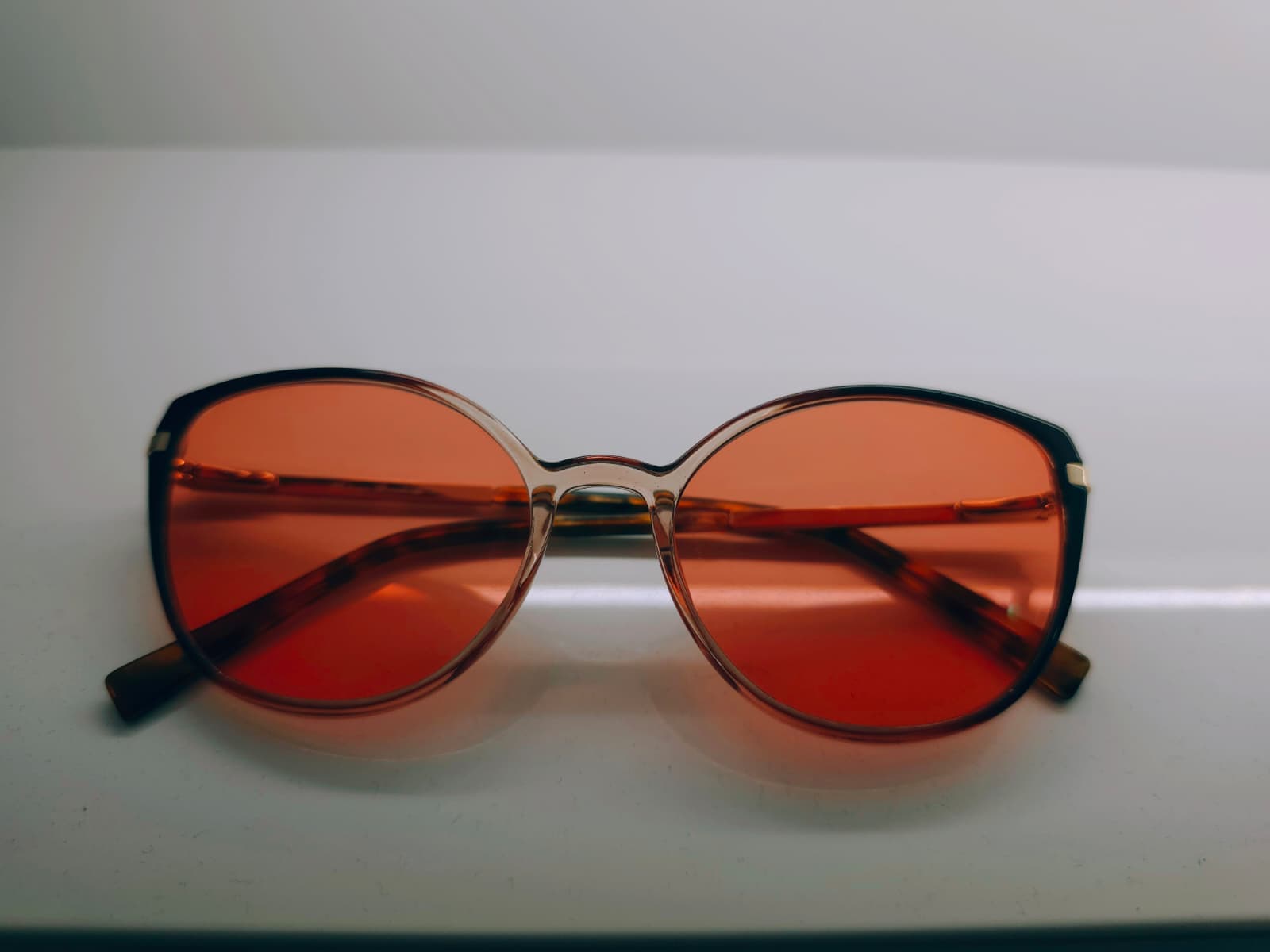
- FL-41 tinted lenses: We stock and dispense FL-41 tinted lenses, which filter the specific blue-green wavelengths implicated in migraine photophobia, available directly from our Auburn clinic.
Treatment Options for Photophobia
Managing photophobia in migraine requires a multi-modal approach. From an optical perspective, the most clinically supported option is FL-41 tinted lenses. These rose-amber lenses are precisely characterised to filter the 480 to 520nm wavelength band, and multiple clinical studies have demonstrated their efficacy in reducing migraine frequency and light sensitivity severity.
Other optical strategies include using anti-reflective coatings on spectacle lenses to reduce glare and lens flare, ensuring screen settings minimise blue emission (Night Shift or Night Mode), and adjusting work environments to reduce fluorescent lighting where possible. For some patients, reducing digital screen exposure and implementing structured screen breaks significantly reduces the migraine burden.
From a broader medical perspective, migraine management typically involves a combination of trigger avoidance, pharmacological prophylaxis (such as beta blockers or CGRP inhibitors), and acute treatment. Your GP or neurologist is best placed to advise on the pharmacological side. As optometrists, we focus on the visual and optical contributions to migraine, which are often underappreciated in standard medical management.
“The visual system is central to migraine biology. Addressing optical triggers, particularly through FL-41 lens therapy, is an underutilised and evidence-based approach that can make a real difference for the right patients.”
, Dr Zobaida Tahiri, Therapeutically Endorsed Optometrist, Auburn NSW
Read more: FL-41 Migraine Glasses: The Science Behind Tinted Lenses and Digital Eye Strain and Migraines.
If light is a primary trigger for your migraines, FL-41 glasses are now something you can order from home. We supply them online across Australia, prescription or non-prescription, supervised by Dr Tahiri. You do not need to be a patient of ours to order, and delivery is free with standard shipping.
See our FL-41 glasses onlineBook a consultation at Prime Optometrists in Auburn NSW 2144. We see patients from Auburn, Berala, Lidcombe, Granville, Parramatta, Merrylands and all of Western Sydney.