

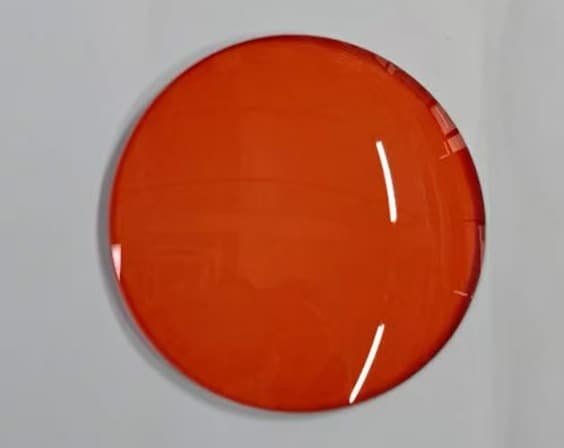
If you have been researching glasses for migraine or light sensitivity, you have likely come across two names: FL-41 and Avulux. Both are described as precision tinted lenses for migraine management. Both have clinical evidence behind them. Patients ask me regularly which one they should choose.
My answer is that this is often the wrong starting question. A better question is: what does the published research actually show for each technology, and which is appropriate for your specific presentation? This article gives you an honest, clinician-informed comparison of FL-41 and Avulux, including the independent evidence, the key differences, and how a proper clinical assessment informs the decision.
I am Dr Zobaida Tahiri, a therapeutically endorsed optometrist at Prime Optometrists in Auburn, Western Sydney. I have reviewed the peer-reviewed literature on both lens technologies. I offer FL-41 lenses at my clinic because the evidence supports them and they are accessible and practical for most patients. I have no commercial relationship with Avulux or their distributors.
Understanding FL-41 Tinted Lenses
FL-41 is a precision rose-amber tinted lens developed in the late 1980s and early 1990s in the United Kingdom. The name refers to a specific spectral transmission profile rather than a brand or proprietary product. Any optical laboratory can manufacture lenses to this spectral specification, though quality varies between suppliers. Properly characterised FL-41 lenses are calibrated to attenuate light in the 480 to 520nm blue-green wavelength band.
This wavelength range is targeted because of its effect on a specialised population of retinal cells known as intrinsically photosensitive retinal ganglion cells (ipRGCs). These cells contain the photopigment melanopsin and are maximally sensitive to light in the 480 to 520nm range. Research published in Nature Neuroscience (Noseda et al., 2010, Vol. 13, No. 2) identified a retino-thalamic pathway by which light signals from ipRGCs reach the posterior thalamus, where they converge with pain-signalling neurons from the meninges. This gives us a precise neural explanation for why light worsens migraine pain, and why filtering blue-green wavelengths specifically reduces this effect.
A subsequent study published in Brain (Noseda, Burstein et al., 2016, Vol. 139, Part 7) found that a narrow-band green wavelength of approximately 530nm was the least pain-exacerbating light for migraine sufferers during an acute attack, while blue and red wavelengths significantly worsened headache intensity. This validated the FL-41 approach of filtering the blue-green band while allowing some mid-spectrum green light to pass through.
The clinical evidence for FL-41 in migraine includes a randomised controlled trial conducted at the University of Birmingham, published in Cephalalgia (the journal of the International Headache Society), which found a statistically significant reduction in migraine frequency among patients wearing FL-41 lenses compared to those wearing a control grey tint. A paediatric study found that children wearing FL-41 lenses experienced approximately 74 percent fewer migraine attacks compared to a control group. FL-41 also has strong evidence for blepharospasm: a randomised controlled trial published in Ophthalmology (the journal of the American Academy of Ophthalmology) by Blackburn and colleagues (2009, Vol. 116, No. 5) found significant improvements in blink frequency, fluorescent light sensitivity, overall light sensitivity, and blepharospasm severity. This evidence comes from independent research groups unaffiliated with any lens manufacturer.
Understanding Avulux Migraine and Light Sensitivity Lenses
Avulux is a proprietary, patented lens technology produced by a Canadian company. Unlike FL-41, which is a spectral specification that multiple suppliers can manufacture, Avulux is a specific product made under controlled proprietary conditions. Its filtering approach targets multiple wavelength bands: blue light (around 480nm), amber light (around 590nm), and red light (around 620 to 700nm), while allowing green light (around 530nm) through. The manufacturer states that Avulux lenses filter up to 97 percent of these combined wavelengths.
The multi-band approach draws on the same foundational research as FL-41. The 2016 Brain study by Noseda and Burstein, cited above, showed that both blue and red wavelengths worsened migraine headache intensity during attacks, while green was most tolerable. Avulux uses this finding as part of the scientific rationale for its broader spectral filtering strategy.
According to the manufacturer, Avulux has been studied in randomised, double-blind, placebo-controlled trials. The company reports a study showing statistically significant improvements on the Headache Impact Test (HIT-6) scale in patients using their lenses, and a further study (2023) reporting benefit in migraine pain relief when lenses were worn at the onset of an attack. These studies, as reported by the manufacturer, represent a meaningful evidence base for the technology.
It is important to note that an independent review by the Association of Migraine Disorders (AMD) of a randomised trial of Avulux lenses found no statistically significant difference between Avulux and placebo in the primary analysis, with benefit identified only in a post-hoc subgroup analysis. This does not mean Avulux is ineffective for patients who respond to it, but it does mean the evidence requires careful clinical interpretation rather than sole reliance on manufacturer claims.
The Key Technical Differences
The two technologies differ in three clinically meaningful ways.
Wavelengths filtered. FL-41 targets the 480 to 520nm blue-green band specifically, based on the ipRGC sensitivity peak. Avulux targets three bands: blue, amber, and red. Both have a scientific rationale grounded in the same underlying migraine photophobia research. Whether broader multi-band filtering provides additional clinical benefit over FL-41 has not been tested in a head-to-head study.
Colour rendering. FL-41 lenses have a visible rose-amber tint that affects colour perception. Most patients adapt within a few days of consistent wear. Avulux lenses produce a more neutral visual appearance with less colour distortion. For patients in professions where colour accuracy is important, this distinction matters.
Use case evidence. The FL-41 evidence base has focused primarily on preventive wear for reducing migraine frequency in environments with fluorescent lighting and screens. Avulux has been studied for use during the acute phase of a migraine attack. These are not mutually exclusive use cases, and some patients may benefit from different approaches at different phases of their migraine cycle.
What the Independent Evidence Shows
The Association of Migraine Disorders has stated that there are currently no head-to-head studies comparing migraine glasses from different manufacturers. This is the most important single fact in this comparison. Any claim that FL-41 is categorically superior to Avulux, or vice versa, goes beyond what the current evidence can support.
What the evidence does support is the following. FL-41 has a longer independent evidence base, with studies from multiple unaffiliated research groups confirming its mechanism and clinical benefit in migraine frequency reduction and blepharospasm management. Avulux has more recent manufacturer-conducted trials showing HIT-6 improvements, though independent replication is still developing. Both have peer-reviewed evidence. Neither has been shown superior to the other in a direct comparison.
Individual responses to both technologies vary considerably. Some patients wearing FL-41 report significant benefit. Others find the tint distracting or insufficient. The same variability applies to Avulux. The appropriate choice depends on the individual clinical presentation, lifestyle considerations, and where in the migraine cycle the lens is primarily intended to be worn.
Price and Australian Availability
For Australian patients, there is a meaningful practical difference between the two options. FL-41 lenses are available at Prime Optometrists from $249, incorporated into a full optical prescription including single vision, bifocal, and progressive lenses. They can be assessed, prescribed, and ordered in a single appointment.
Avulux lenses are currently only available in Australia through clinic-based practitioners and cannot be ordered directly online within Australia. Their price point is considerably higher than FL-41. For patients with private health optical extras cover, the cost difference may be partially offset through rebates, but it remains a meaningful consideration, particularly for patients on a fixed income or those who require frequent prescription updates.
Which Might Be Right for You?
For most patients presenting with light-triggered migraine, indoor fluorescent light intolerance, screen-related photophobia, post-concussion light sensitivity, or blepharospasm, FL-41 is a well-supported and accessible first clinical step. The evidence base is robust, the prescription can be incorporated, and a clinical assessment can be completed in a single appointment.
For patients who have already tried FL-41 and found the benefit insufficient, or who have a professional need for a neutral-tinted lens, discussing a broader-spectrum filter option with an optometrist is reasonable. For patients seeking a lens specifically for use during the acute phase of a migraine attack, the Avulux evidence for this specific use case is more developed, and referral to a clinic that offers it may be appropriate.
The most important step is not choosing a lens based on marketing. It is booking a proper clinical assessment where your prescription, binocular vision function, light sensitivity pattern, and lifestyle needs are all considered before a recommendation is made.
My Clinical Perspective
I offer FL-41 lenses at Prime Optometrists because the independent evidence supports them, they are practical for most patients, and I can assess and fit them as part of a complete optometric consultation. For patients whose migraine management is already established and who are looking for a complementary optical tool, FL-41 is an evidence-based and cost-accessible option well within optometric scope.
What I want patients to take from this comparison is that neither lens is a cure for migraine or photophobia. Both are tools that may help manage one aspect of a complex condition, and both work best as part of a broader management approach that includes appropriate medical care, migraine trigger management, and regular clinical review. The role of a clinician is to assess your individual presentation and help you choose the right tool for your specific situation.
“The most important question is not which lens has better marketing. It is which option, if any, is clinically appropriate for your presentation, fitted in your correct prescription, and used consistently in the environments where it will make a difference.”
Dr Zobaida Tahiri, Optom, Therapeutically Endorsed Optometrist, Auburn NSW
Book a FL-41 lens assessment with Dr Zobaida Tahiri at Prime Optometrists Auburn. The comprehensive eye examination is bulk billed for eligible Medicare card holders. FL-41 glasses start from $249, and health fund optical extras may reduce your out-of-pocket cost further.
Book a consultationFL-41 lenses and Avulux lenses are precision-tinted optical lenses, not therapeutic devices. Neither is a substitute for medical management of migraine or any other condition. Results vary between individuals. Information in this article is for educational purposes and does not constitute medical advice. Please continue working with your treating neurologist or GP alongside any optical intervention.
Read more: FL-41 Migraine Glasses: The Science Behind Tinted Lenses, Migraines and Light Sensitivity: What Your Eyes Are Telling You, and Post-Concussion Light Sensitivity and FL-41 Glasses.