

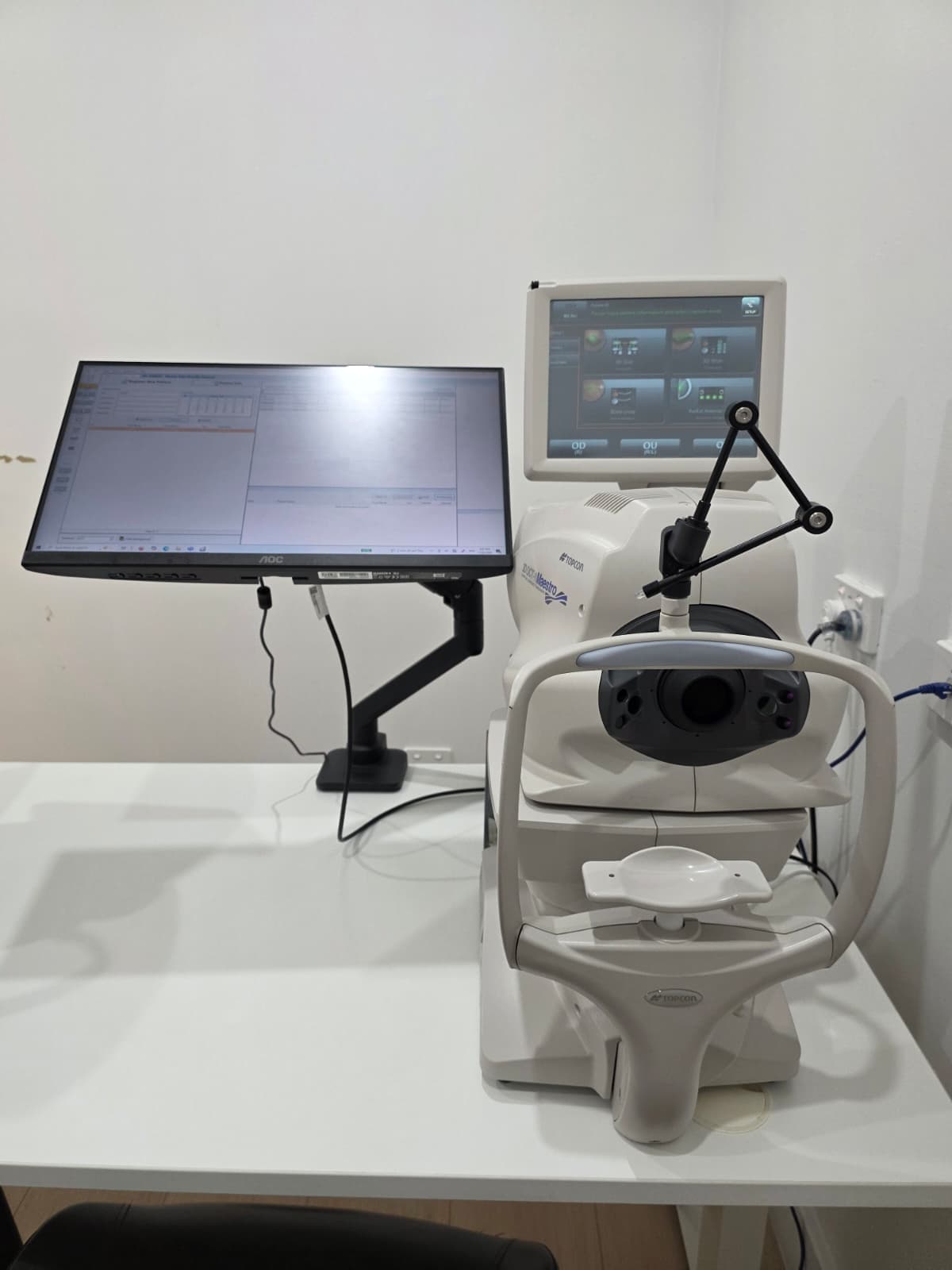
The eye is the only place in the body where blood vessels and nerve tissue can be directly observed without any incision or imaging procedure. This makes the retina a unique window into systemic health,changes visible in the back of the eye often reflect conditions occurring throughout the body. An optometrist performing a comprehensive eye examination is not just checking vision,they are examining one of the most diagnostically rich tissues in the human body.
Diabetes
Diabetic retinopathy,damage to the retinal blood vessels caused by chronically elevated blood glucose,is often visible on retinal examination before the patient has any visual symptoms. Microaneurysms (tiny balloon-like bulges in blood vessel walls), haemorrhages, and hard exudates (lipid deposits from leaking vessels) are classic signs. Dr Tahiri detects and monitors these changes at our Auburn clinic, and has identified previously undiagnosed diabetes through retinal findings on multiple occasions.
Hypertension (High Blood Pressure)
Hypertensive retinopathy shows characteristic changes: arteriovenous nicking (where thickened arteries compress veins at crossing points), copper or silver wiring of arteries, and in severe cases, retinal haemorrhages and papilloedema (swelling of the optic nerve). These changes indicate systemic vascular damage and often prompt urgent medical review.
Neurological Conditions
- Multiple sclerosis: Optic neuritis,inflammation of the optic nerve,is often the first manifestation of MS. Unexplained sudden visual loss or reduced colour vision in a young patient warrants neurological investigation.
- Brain tumours and raised intracranial pressure: Papilloedema (optic disc swelling) is a sign of raised pressure inside the skull and requires emergency neurological assessment.
- Stroke: Visual field defects following a stroke are detected on perimetry. Carotid artery disease can produce emboli visible as bright cholesterol plaques in retinal vessels.
Thyroid Disease
Graves' disease (autoimmune hyperthyroidism) causes proptosis (bulging of the eyes), lid retraction, and extraocular muscle changes visible on examination. Thyroid eye disease is sometimes detected by optometrists before an endocrine diagnosis has been made.
Other Conditions
- Anaemia,pale, poorly perfused optic disc and retinal vessels
- Lupus (SLE),retinal vasculitis and cotton wool spots
- Sickle cell disease,specific retinal vascular changes
- Sarcoidosis,uveitis and optic nerve involvement
Comprehensive health-focused eye exam at Prime Optometrists Auburn
Dr Tahiri performs detailed retinal and optic nerve assessment at every examination. Bulk billing available. (02) 9761 0005