

Age-related macular degeneration (AMD) is the leading cause of permanent vision loss in Australians over 50. It affects the macula,the central part of the retina responsible for detailed central vision used in reading, recognising faces, and driving. In its early stages, AMD causes no symptoms. By the time a patient notices visual disturbance, the condition has often advanced significantly.
Types of AMD
Dry AMD (Atrophic)
The most common form,approximately 85–90% of AMD cases. Characterised by the accumulation of drusen (small yellowish deposits) under the retina, and gradual atrophy of the retinal pigment epithelium. Progresses slowly over years. There is currently no treatment to halt dry AMD, but monitoring, nutritional supplementation (AREDS2 formula), and UV protection slow progression and reduce risk of conversion to wet AMD.
Wet AMD (Neovascular)
Occurs in approximately 10–15% of AMD patients but causes the majority of severe vision loss. Abnormal blood vessels grow beneath the retina and leak fluid and blood into the macula. Vision loss can be rapid,days to weeks. Treatment with anti-VEGF injections (administered by an ophthalmologist) is highly effective if started promptly. This is why regular monitoring matters,early detection of conversion to wet AMD allows treatment before significant vision loss occurs.
Risk Factors
- Age over 50,risk increases significantly with each decade
- Family history,first-degree relative with AMD increases risk 3–4 fold
- Smoking,the most significant modifiable risk factor, increasing risk 2–4 fold
- UV exposure,chronic UV exposure to the retina contributes to oxidative damage
- Diet low in antioxidants and omega-3 fatty acids
- Cardiovascular disease and hypertension
Warning Signs to Watch For
- Straight lines appearing wavy or distorted (metamorphopsia),a key early symptom of wet AMD
- A dark or grey spot in the centre of vision
- Difficulty reading or recognising faces despite adequate lighting
- Colours appearing less vivid or contrast reduced
- Need for increasingly bright light for reading
Any of these symptoms warrant urgent assessment. Wet AMD treated within days of symptom onset has dramatically better visual outcomes than treatment delayed by weeks.
How We Monitor AMD at Prime Optometrists Auburn
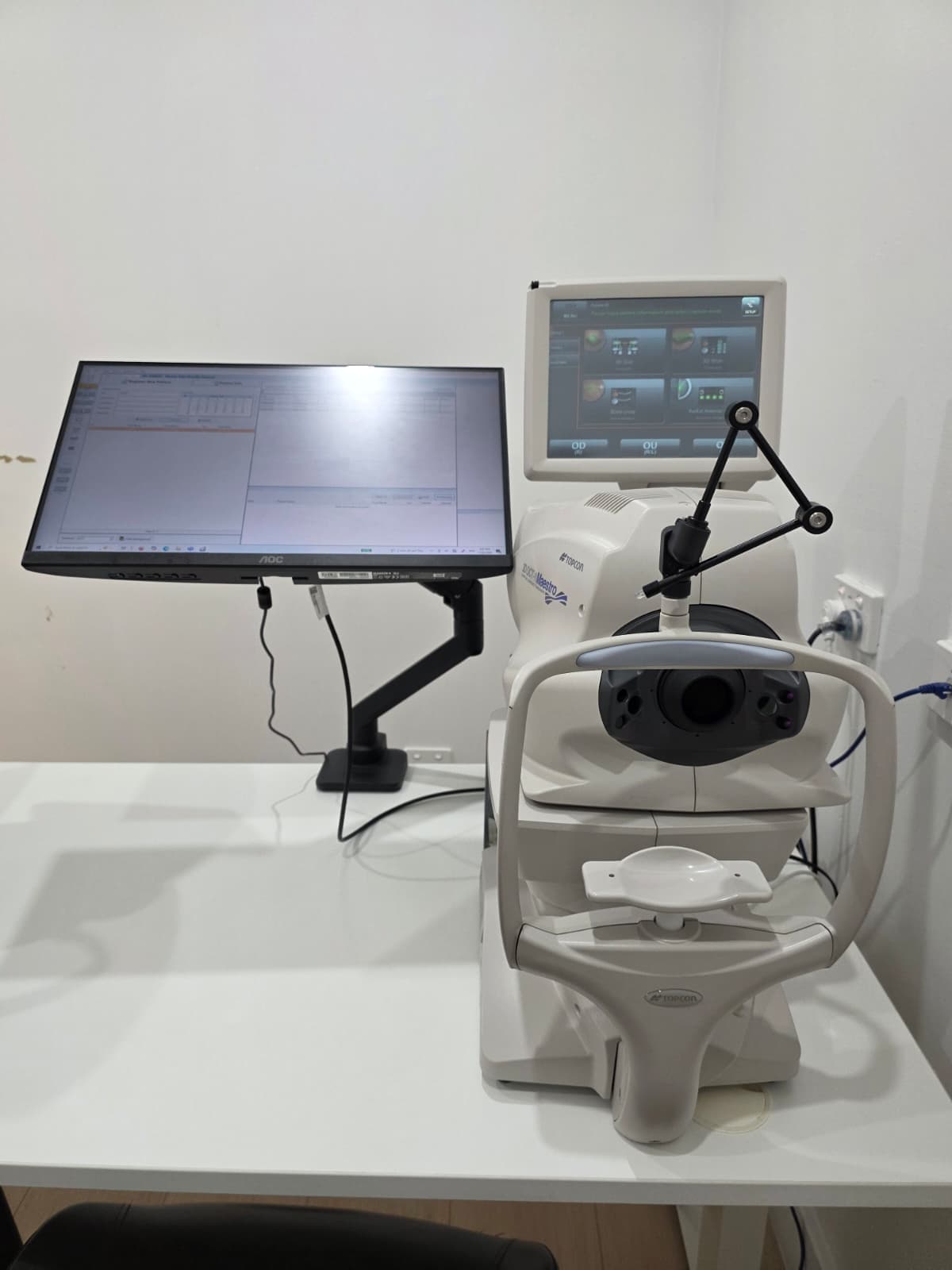
OCT (Optical Coherence Tomography) imaging of the macula provides cross-sectional imaging of all retinal layers, detecting drusen, RPE changes, and early fluid accumulation far earlier than standard fundus examination. Dr Tahiri performs OCT imaging at every examination for patients with diagnosed or suspected AMD.
AMD monitoring with OCT at Prime Optometrists Auburn
Annual monitoring for patients over 50 with AMD risk factors. (02) 9761 0005 · Bulk billing available