

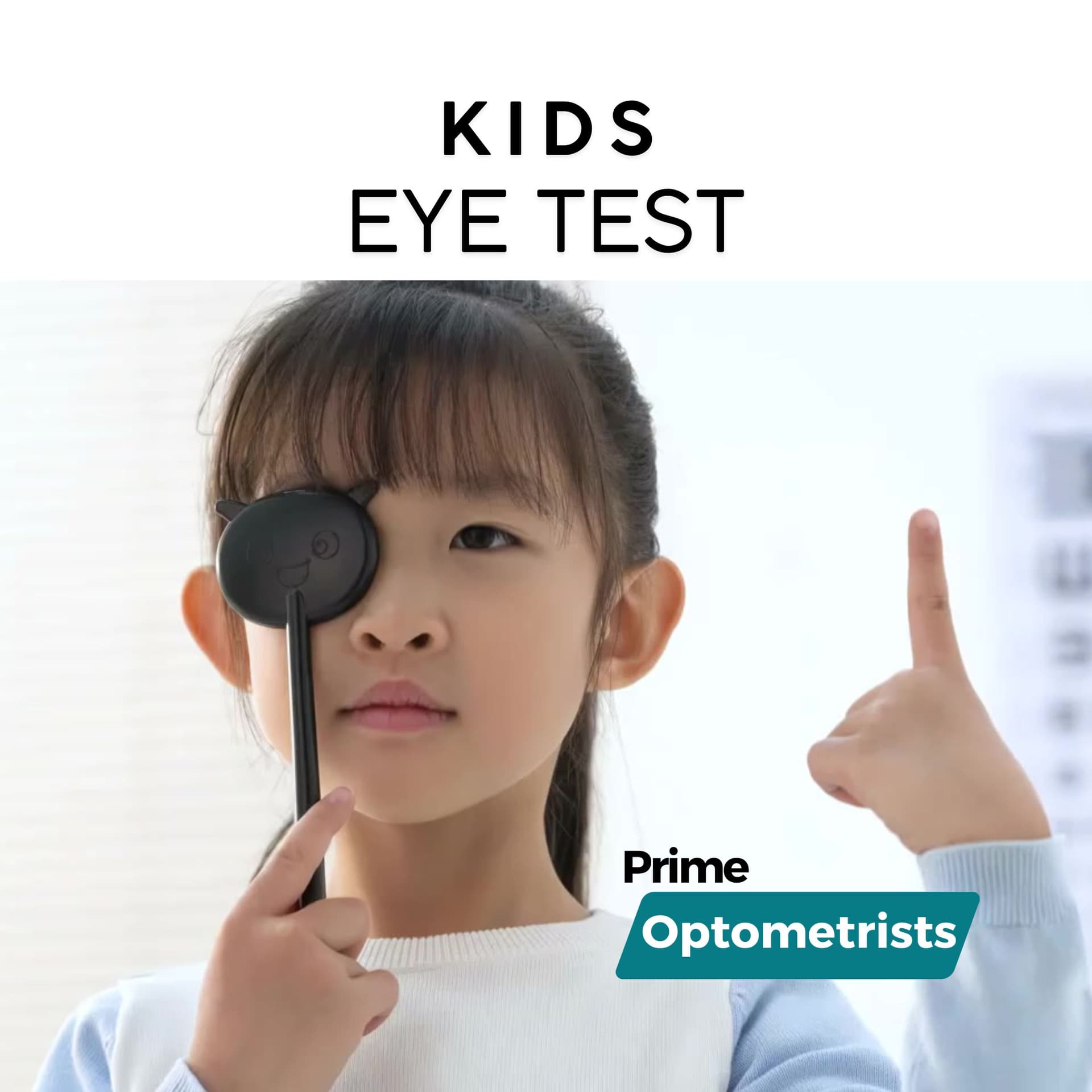
When a parent is told their child is short-sighted, they usually understand this to mean the child can't see things far away. When told the child is long-sighted, many parents assume the child can see far but not near. Both of these simplifications are partially correct,but the full clinical picture is more nuanced, particularly in children, where long-sightedness can be completely "hidden" and still cause significant problems.
Myopia (Short-Sightedness)
Myopia occurs when the eyeball is too long relative to the eye's optical power. Light from distant objects focuses in front of the retina rather than on it. The result: distant objects are blurry, while near objects are clear.
Typical symptoms in children:
- Squinting to see the whiteboard or TV
- Sitting close to screens
- Headaches after looking into the distance
- Not reporting problems with reading or near work
Management: Glasses or contact lenses for correction; myopia control treatment (MiSight, Ortho-K, atropine) to slow progression.
Hyperopia (Long-Sightedness)
Hyperopia occurs when the eyeball is too short, causing light to focus behind the retina. Here's where it gets counterintuitive: young eyes have a very flexible lens that can compensate for moderate hyperopia by flexing (accommodating) to bring the image into focus. A mildly hyperopic child may appear to see perfectly,at distance AND near,because their accommodation is compensating continuously.
This compensation has a cost: the eye muscles are working harder than they should be, particularly for near work. The result in children is often: headaches after reading, difficulty concentrating on near tasks, words going blurry after sustained reading, and occasionally a convergent squint (one eye turning in) as the accommodative effort drives excessive convergence.
Typical symptoms in hyperopic children:
- Headaches after reading or screen work
- Difficulty concentrating in class
- Avoidance of reading
- Eye rubbing
- Occasionally, an inward turn of one eye
Children's eye test at Prime Optometrists Auburn,bulk billed
Annual vision checks from 12 months. (02) 9761 0005 · 43 Auburn Rd Auburn NSW 2144 · Mon–Fri 9am–5:30pm · Sat 9am–4:30pm