

There are 25–30 meibomian glands in the upper eyelid and 20–25 in the lower eyelid. Each one secretes a specialised oil called meibum, which forms the outermost layer of the tear film. This oily layer prevents tears from evaporating too quickly between blinks. When these glands malfunction,secreting too little meibum, or meibum that has become thickened and waxy,the tear film becomes unstable and evaporates rapidly. The result is evaporative dry eye disease: the most common form of dry eye.
Why MGD Is So Common
Meibomian gland dysfunction (MGD) prevalence increases with age and screen use. In screen-heavy populations, blink rate reduction slows meibomian gland expression,the natural mechanism by which blinking expresses meibum from the glands. Under-expression leads to gland stagnation, thickening of secretions, and eventually gland atrophy. Studies using meibography (imaging of the glands) show measurable gland dropout even in relatively young screen workers.
Symptoms of MGD
- Chronic eye burning, grittiness, or foreign body sensation
- Eyes that feel worse in air conditioning, on aircraft, or in low humidity
- Intermittent blurred vision that clears with blinking
- Eyelids that feel heavy or sticky
- Paradoxically watery eyes (reflex tearing in response to poor tear quality)
- Contact lens intolerance,lenses feel dry and uncomfortable by mid-afternoon
How MGD Is Assessed
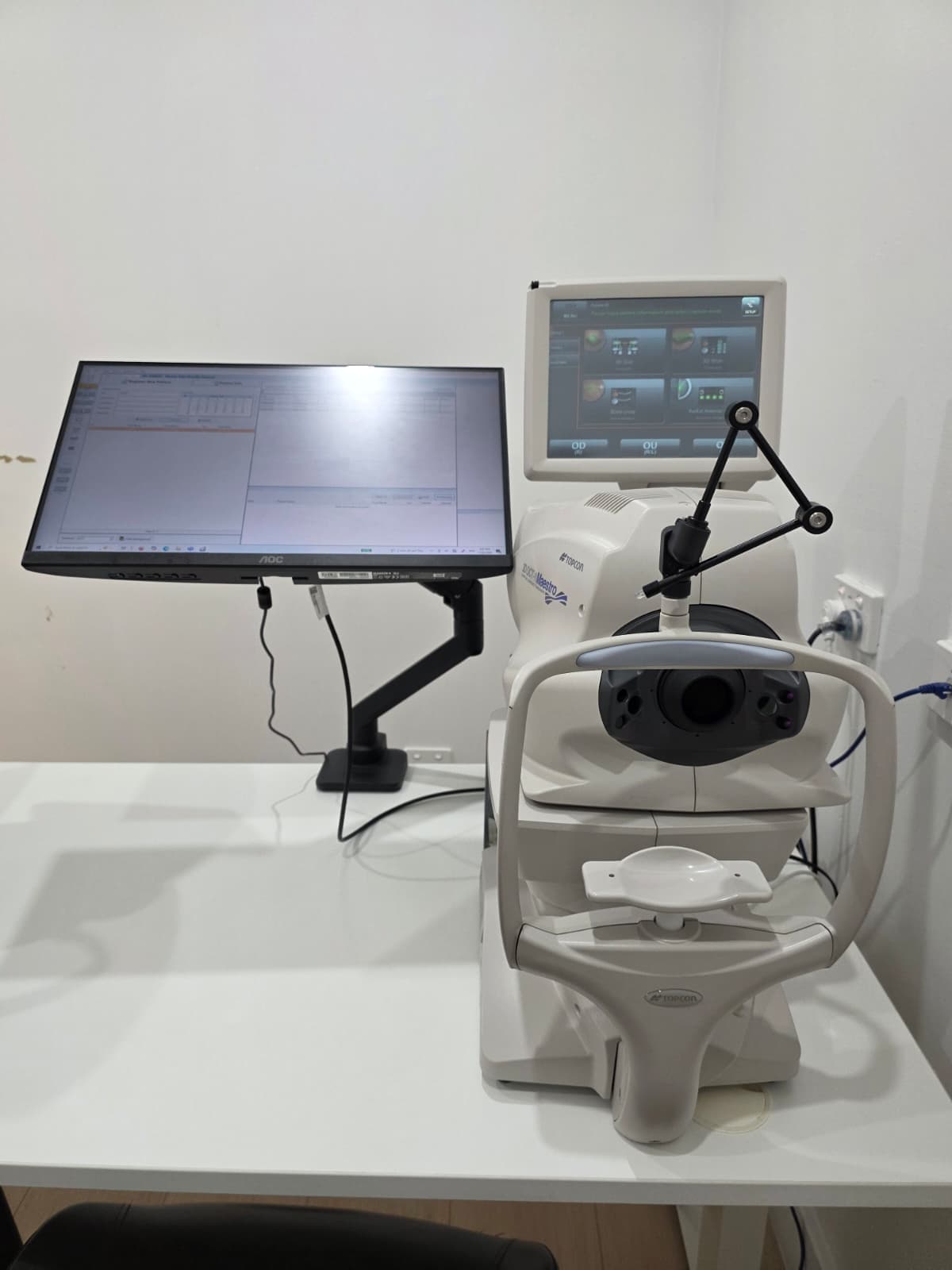
Dr Tahiri assesses meibomian gland function at the slit lamp by gentle expression of the glands: healthy glands express clear, oil-like meibum; dysfunctional glands produce thick, toothpaste-like secretion or nothing at all. In more detailed assessments, meibography (imaging of gland structure) can show the degree of gland dropout.
Treatment
- Warm compress therapy: Softens thickened meibum for more effective expression with blinking. Essential daily treatment for moderate-severe MGD.
- Lid massage: Following warm compresses, gentle massage of the eyelid encourages expression of softened gland contents.
- In-office treatments: Heated lid devices and manual expression procedures performed in clinic.
- Omega-3 supplementation: Evidence supports improvement in meibum quality with high-dose omega-3 fatty acid supplementation.
- Anti-inflammatory drops: Where MGD is accompanied by significant ocular surface inflammation, Dr Tahiri can prescribe appropriate topical treatment.
MGD and dry eye assessment at Prime Optometrists Auburn
Prime Optometrists Auburn · (02) 9761 0005 · Therapeutically endorsed dry eye management · Bulk billing available