

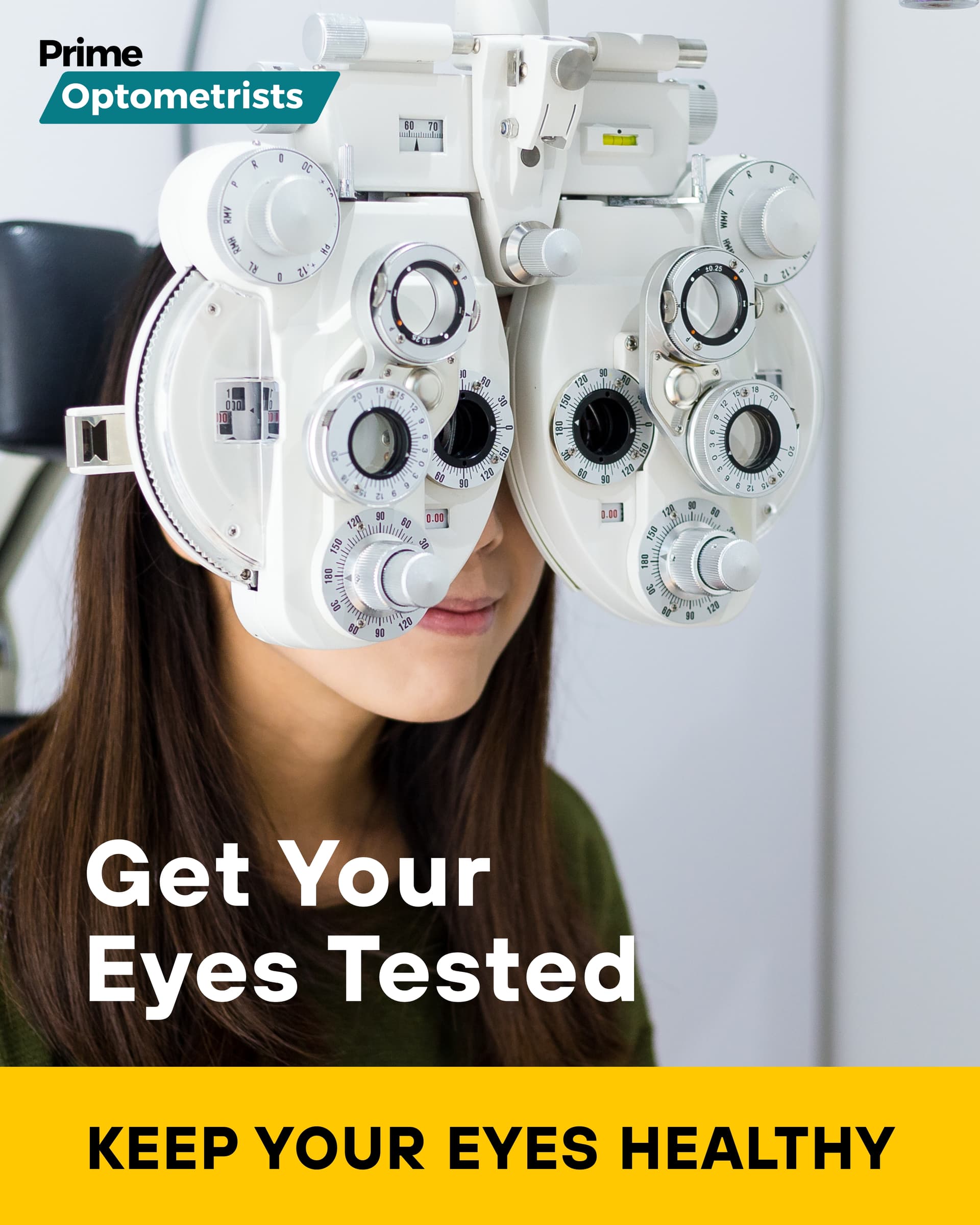
A common question we hear at Prime Optometrists in Auburn is: “How often should I get my eyes tested?” The honest answer: it depends on your age, health status, and risk factors. But as a general rule, most Australians leave it far too long between eye examinations.
Recommended Eye Test Frequency by Age Group
Children (0–18 years)
We recommend a first children's eye test before starting school (ages 3–5), and then annually throughout school years. This is especially important for detecting:
- Myopia (short-sightedness), which can worsen rapidly in school-aged children
- Amblyopia (lazy eye), most effectively treated before age 7–8
- Strabismus (eye turn/squint)
- Learning-related vision problems
Children rarely complain about vision problems, they simply assume everyone sees the same way they do. Annual testing is essential for catching issues early. Bulk billing is available for children's eye tests under Medicare.
Adults 18–40
For most healthy adults with no significant risk factors, a comprehensive eye test every 2 years is generally appropriate. However, you should book sooner if you:
- Notice any changes to your vision
- Experience frequent headaches
- Have a family history of glaucoma or macular degeneration
- Wear contact lenses (annual reviews are standard)
- Experience dry eye symptoms
- Work long hours on screens
Adults 40–60
This is the age when presbyopia (difficulty focusing at near, often called “short arm syndrome”) develops, and when the risk of developing conditions like glaucoma, macular degeneration, and cataracts begins to increase. We recommend eye tests at least every 1–2 years in this age group.
Adults Over 60
Annual eye tests are strongly recommended for all adults over 60. The risk of age-related eye disease increases significantly with every decade, and early detection, with OCT imaging and visual field testing, is the key to preserving vision.
People with Systemic Health Conditions
If you have any of the following, annual eye tests are recommended regardless of age:
- Diabetes (risk of diabetic retinopathy)
- High blood pressure
- Family history of glaucoma
- Autoimmune conditions
- History of LASIK or other eye surgery
What Does Medicare Cover?
Medicare Australia provides a benefit for comprehensive optometry consultations. At Prime Optometrists Auburn, we offer bulk billing for eligible patients with a valid Medicare card, meaning your comprehensive eye examination is bulk billed with no out-of-pocket cost for eligible patients.
Note: Medicare covers one comprehensive eye examination per patient per 3 years (2 years for children and high-risk adults). Additional consultations within that period may attract a gap fee.
Book Your Eye Test in Auburn Today
Prime Optometrists is conveniently located in Auburn NSW 2144, easily accessible from Lidcombe, Granville, Parramatta, Berala, Regents Park and Silverwater. Book your bulk-billed eye examination online, it takes just a few minutes, and your eye health is worth it.
“The eye examination has evolved dramatically in the last decade. What we can now detect in a routine appointment using advanced diagnostic technology, including early glaucoma, macular disease, and diabetic changes, makes regular testing more important than ever.”
, Dr Zobaida Tahiri, Optometrist Auburn NSW