

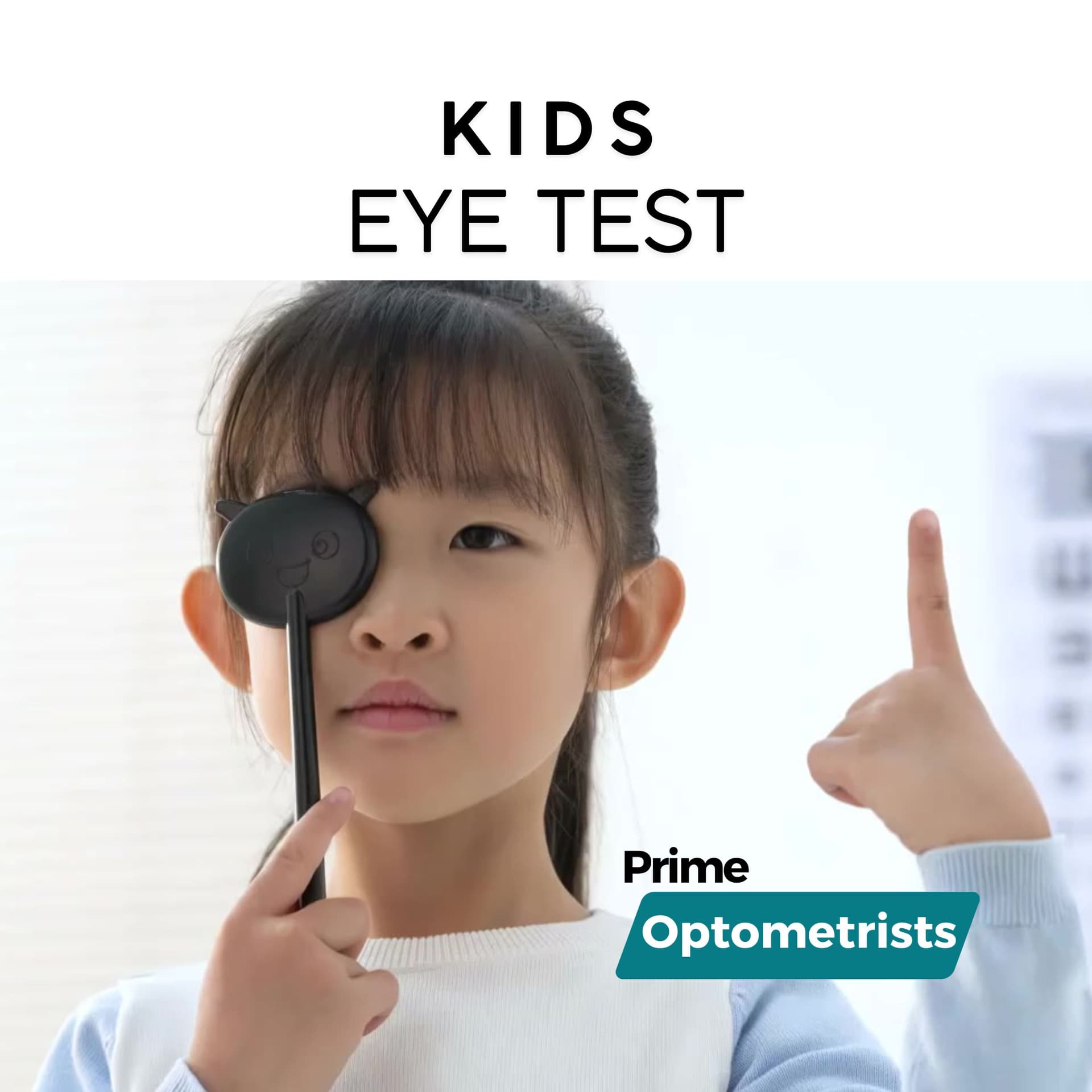
One of the most common questions families ask us is: how often does each person in our family actually need an eye test? The answer is different for every age group,and it changes based on risk factors, family history, and whether problems have already been identified.
This guide covers every member of your family, from newborns to grandparents, with the recommended testing frequency and the specific conditions we are watching for at each stage.
Babies and Toddlers (0 – 3 Years)
Recommended frequency: By 12 months, then as directed
The first three years of life are the most critical period for visual development. The brain is actively learning to process images from both eyes simultaneously. If a problem is not identified and treated in this window, the visual system can permanently under-develop,a condition called amblyopia (lazy eye).
What we look for at this age:
- Amblyopia (lazy eye),reduced vision in one eye because the brain is suppressing input from it
- Strabismus (eye turn),eyes pointing in different directions, which can cause or result from amblyopia
- Significant refractive errors,high long-sightedness or astigmatism that strains the visual system
- Blocked tear ducts,common in infants, usually resolves but sometimes needs intervention
- Congenital cataracts,rare but vision-threatening if not treated immediately
A child this age cannot read a letter chart,but we have age-appropriate techniques that do not require verbal responses and are completely comfortable for infants. Medicare bulk billing applies.
Pre-School Children (3 – 5 Years)
Recommended frequency: Annually from age 3
This is the critical window before school. Children who start kindergarten with undetected vision problems often fall behind in reading and literacy not because of learning difficulties, but because they literally cannot see the page clearly. Long-sightedness,which affects reading distance,is particularly common and frequently missed.
- Long-sightedness (hyperopia),causes difficulty focusing at close distances, headaches after reading, avoidance of books
- Astigmatism,blurred vision at all distances; children often do not realise their vision is abnormal
- Colour vision deficiency,identified now so teachers and parents can adapt accordingly
- Amblyopia,treatment is most effective before the age of 7; this is the last opportunity for easy correction
School-Age Children (6 – 12 Years)
Recommended frequency: Every 12 months
Myopia (short-sightedness) most commonly develops between ages 6 and 12, and it is progressing at epidemic rates in Australian children. Annual testing is essential in this group,not to give them glasses, but to catch myopia early enough that progression can be managed with myopia control treatment.
School vision screenings check distance vision only. They miss long-sightedness entirely, and they miss focusing problems that affect reading at close range. A child can pass a school screening and still have significant vision problems affecting their schooling.
- Myopia onset and progression,the most important condition to catch in this age group
- Binocular vision problems,eyes that do not work together efficiently cause fatigue, headaches, and reading difficulties
- Convergence insufficiency,a focusing coordination issue often mistaken for dyslexia or ADHD
Teenagers (13 – 18 Years)
Recommended frequency: Every 12 months
Myopia typically stabilises in the late teens, but the years leading up to that are often when progression is fastest. Screen time is at its highest in this age group. Contact lenses become a practical option and we assess suitability as part of the exam.
Keratoconus,a hereditary corneal condition that causes progressive distortion of vision,often first appears in the teenage years and early 20s. Teenagers with a family history of keratoconus are screened with corneal topography as a precaution.
Adults (19 – 59 Years)
Recommended frequency: Every 2 years; annually with risk factors
Adults are the most likely to skip eye tests,usually because their vision feels fine. But many of the most serious conditions affecting adults in this age group cause no symptoms in their early stages. Glaucoma, for example, destroys peripheral vision silently and does not affect central vision until significant damage has already occurred.
Risk factors that move adults to annual testing include: family history of glaucoma, diabetes, hypertension, use of certain medications (corticosteroids, hydroxychloroquine), or previous eye trauma.
- Glaucoma,the silent thief of sight; pressure and optic nerve assessment every examination
- Dry eye disease,increasingly prevalent with screen-heavy lifestyles
- Diabetic retinopathy,all diabetic patients should have annual eye exams
- Presbyopia onset (from 40s),the need for reading glasses that comes for everyone eventually
Seniors (60+ Years)
Recommended frequency: Every 12 months (Medicare entitles patients over 65 to annual bulk billed testing)
After 65, the frequency of serious eye conditions increases substantially. Medicare recognises this,the standard entitlement for adults is one bulk billed exam every three years, but for patients over 65 it becomes annual. This is one of the most underused Medicare entitlements in Australia.
- Age-related macular degeneration (AMD),leading cause of vision loss over 60; early detection with OCT allows intervention before central vision is lost
- Cataracts,universal with age; monitoring when to refer for surgery
- Glaucoma,prevalence increases significantly after 60
- Diabetic eye disease,particularly important for patients managing type 2 diabetes
- Falls risk,uncorrected vision problems are one of the leading modifiable risk factors for falls in the elderly
Book Your Whole Family In
At Prime Optometrists Auburn, we see patients of every age in the same clinic, on the same day if needed. Call us on (02) 9761 0005 to book multiple family members,we will schedule them back to back so the whole family can come in together. Bulk billing for all eligible patients.