

The ability to drive safely is deeply tied to independence, particularly for older Australians in suburban and regional areas. At the same time, age-related changes in vision can subtly and significantly impair driving performance before the driver,or their family,recognises the problem. Understanding what these changes are, when they become significant, and what can be done about them allows proactive management rather than crisis response.
Age-Related Vision Changes That Affect Driving
- Reduced visual acuity: The most obvious change. May be corrected with updated glasses prescription. NSW requires a minimum visual acuity of 6/12 (with correction) in the better eye for an unconditional licence.
- Reduced contrast sensitivity: The ability to distinguish between objects with similar levels of brightness. Reduced contrast sensitivity makes it harder to see pedestrians in low light, judge distances, and detect lane markings on faded roads. This is not captured by standard letter chart testing.
- Glare sensitivity: Increased light scattering from early cataracts, altered pupil dynamics, and changes to the lens make bright lights (oncoming headlights, sun glare) more impairing. Glare recovery time also slows with age.
- Reduced visual field: Peripheral vision loss,most commonly from glaucoma,reduces awareness of hazards approaching from the sides. Visual field assessment is part of the NSW fitness to drive evaluation.
- Slower dark adaptation: Transitioning from bright to dark environments (tunnels, dusk, night) takes longer, creating periods of significantly reduced vision.
- Reduced depth perception: Makes judging gap acceptance (merging, parking, overtaking) less accurate.
NSW Licence and Vision Requirements
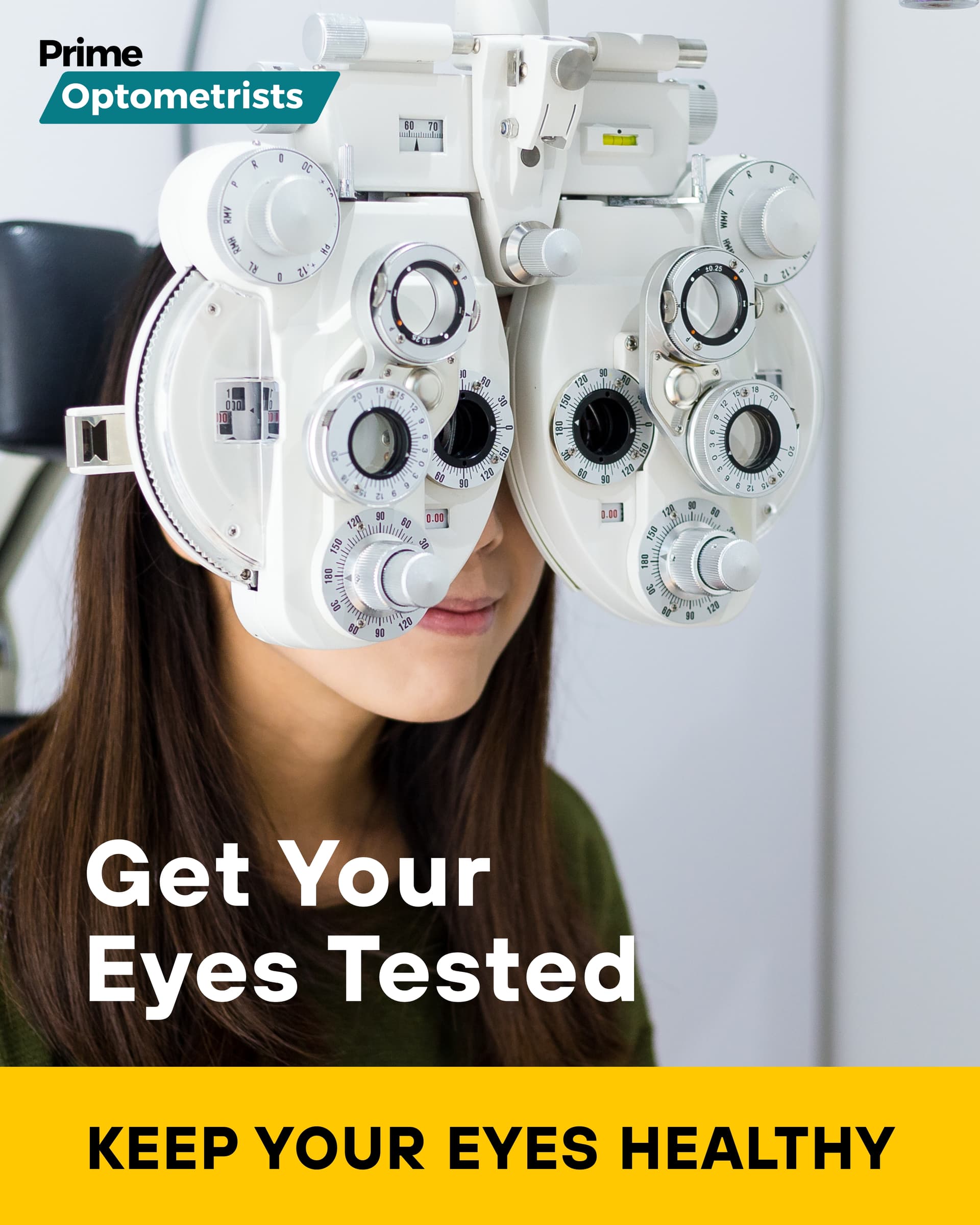
Transport for NSW requires drivers to meet minimum vision standards. From age 75, drivers must present a current medical fitness assessment (Form 1) to NSW Transport annually. Optometrists provide vision assessments for this purpose. Dr Tahiri provides fitness-to-drive visual assessments at Prime Optometrists Auburn, with reports suitable for Transport for NSW submissions.
When to Have a Driving Vision Assessment
- Any new diagnosis of glaucoma, macular degeneration, or cataracts
- Increasing difficulty with night driving
- Family members or passengers expressing concern about driving safety
- At age 75 for the annual Transport for NSW assessment
- Following a near-miss incident or accident
Driving vision assessment at Prime Optometrists Auburn
Fitness-to-drive reports for Transport for NSW available. Bulk billing with Medicare. (02) 9761 0005