

FL-41 Tinted Lenses, Auburn NSW
FL-41 Glasses for Post-Concussion Light Sensitivity
Light sensitivity affects approximately 50 to 80 percent of people following a concussion. For many, it persists long after other symptoms resolve.
FL-41 tinted lenses are used in post-concussion visual rehabilitation to filter the specific wavelengths that drive hyperactivated light pathways after brain injury. Unlike dark sunglasses, which can worsen sensitivity over time, FL-41 lenses selectively target the problematic blue-green band. Dr Zobaida Tahiri, therapeutically endorsed optometrist, provides clinical assessment at our Auburn NSW practice.
Post-Concussion Light Sensitivity
Photophobia, or light sensitivity, is one of the most common and functionally disabling symptoms following a concussion or mild traumatic brain injury (mTBI). Research indicates it affects approximately 50 to 80 percent of people after a concussion, making it more prevalent than many other commonly recognised concussion symptoms.
For most people, light sensitivity gradually improves as the brain recovers in the days to weeks following injury. However, for a significant proportion of patients, particularly those with a pre-existing history of migraine, persistent light sensitivity can extend for months and become a defining feature of post-concussion syndrome.
Post-concussion photophobia can prevent return to work or study, particularly in environments with fluorescent lighting, computer screens, or high ambient light. The inability to tolerate ordinary indoor lighting can severely limit independence and quality of life during recovery.
FL-41 tinted lenses are not a treatment for concussion itself. They are a precision-tinted optical lens used as part of post-concussion visual rehabilitation to help manage the photophobic component of recovery. Patients with concussion must remain under the care of their treating medical team.
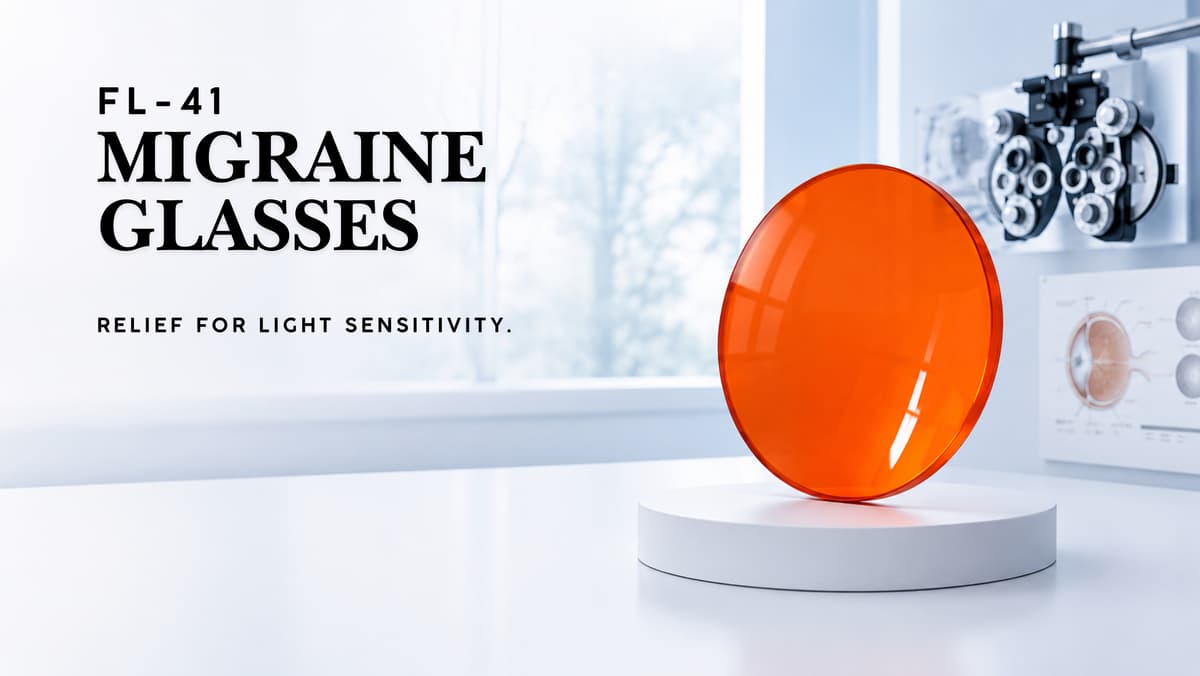
How FL-41 May Help with Post-Concussion Photophobia
Understanding why FL-41 lenses are preferred over dark sunglasses requires understanding what happens to the visual system after a concussion.
Brain Hyperactivation After Injury
After a concussion, the brain's light processing pathways, particularly those involving the thalamus and visual cortex, can become hyperactivated. This means that the normal gating and filtering of visual input is disrupted, causing ordinary light levels to overwhelm the system. The blue-green wavelengths in the 480 to 520nm range, which most strongly stimulate the intrinsically photosensitive retinal ganglion cells (ipRGCs), are particularly problematic in this hyperactivated state.
The Dark Adaptation Paradox
A common instinct after developing post-concussion light sensitivity is to wear very dark sunglasses indoors. While this can provide immediate relief, it creates a significant problem over time. When the visual system is kept in a consistently dark environment, it lowers its threshold for detecting light through dark adaptation. When the dark lenses are removed, ordinary light feels even more intensely bright than before. This paradox can make light sensitivity progressively worse, not better. FL-41 lenses address this by filtering the specific problematic wavelength rather than overall light.
FL-41 as Part of Visual Rehabilitation
Post-concussion visual rehabilitation typically involves a graduated return to visual activities, sometimes including vision therapy, convergence exercises, and management of associated headache disorders. FL-41 lenses contribute to this process by reducing the ambient blue-green light load that can trigger headache and light sensitivity in affected environments, allowing patients to gradually increase their tolerance to visual stimulation over time.
When to Seek Assessment
Consider seeking a clinical assessment for post-concussion light sensitivity if your photophobia persists beyond four weeks post-injury, if you are unable to tolerate screens or fluorescent environments, if light sensitivity is preventing return to work or study, or if it is accompanied by persistent headache. Early assessment and appropriate management, including consideration of FL-41 lenses, may help support recovery.
The Evidence
Peer-reviewed research supports the role of light-filtering lenses in managing post-concussion photophobia.
2024 Peer-Reviewed Study, PubMed Central
Light-Filtering Lenses and Visual Photosensitivity in TBI
A 2024 study found that participants with traumatic brain injury had significantly lower visual photosensitivity thresholds compared to controls, confirming the objective reality of post-concussion photophobia. The study further found that light-filtering lenses produced measurable improvements in photosensitivity thresholds in the affected participants.
This research contributes to the growing body of evidence supporting the use of wavelength-selective filtering as part of the clinical management of post-concussion light sensitivity.
Established Evidence Base
FL-41 and the ipRGC Pathway
The rationale for FL-41 in post-concussion light sensitivity draws from the established neuroscience of photophobia. Research by Noseda and Burstein (Nature Neuroscience, 2010) identified the intrinsically photosensitive retinal ganglion cell (ipRGC) projection as the pathway by which light exacerbates pain in sensitised conditions. These ipRGCs are maximally sensitive to the 480nm blue-green wavelength that FL-41 lenses are calibrated to filter.
In the post-concussion context, this pathway is hypothesised to be abnormally activated due to disrupted central regulation, making filtering of its primary input a logical intervention for managing symptoms.
Important Note
FL-41 tinted lenses are not a treatment for concussion or traumatic brain injury. They may help manage the photophobia associated with post-concussion syndrome as part of a broader rehabilitation approach. FL-41 lenses do not accelerate recovery from brain injury and are not a substitute for medical management. Patients must remain under the care of their treating medical team.
What to Expect at Your Consultation
Dr Zobaida Tahiri provides clinical assessment for post-concussion visual symptoms at our Auburn NSW practice.
History and Visual Assessment
Dr Tahiri will take a detailed history of your concussion, current symptoms, and the specific environments that most worsen your light sensitivity. A comprehensive assessment of your visual function will identify any associated binocular vision or accommodation issues that may be contributing to your symptoms.
Tint Assessment and Recommendation
Not all FL-41 tint densities are appropriate for all situations. A practical assessment of the most suitable tint density for your daily environments, including office, home, and outdoor settings, will guide the recommendation. Your prescription requirements and preferred frame format will also be assessed.
Rehabilitation Guidance
Dr Tahiri provides guidance on how to use FL-41 glasses as part of your broader post-concussion recovery, including how to gradually re-expose yourself to light stimulation over time. Where appropriate, referral pathways to other treating practitioners are discussed.
Frequently Asked Questions
Common questions about FL-41 glasses for post-concussion light sensitivity.
Why does concussion cause light sensitivity?
How long does post-concussion light sensitivity last?
Are FL-41 glasses a treatment for concussion?
Why shouldn't I just wear sunglasses indoors for post-concussion light sensitivity?
When should I seek a clinical assessment for post-concussion light sensitivity?
Can I order FL-41 glasses online if I live outside Sydney?
Disclaimer: FL-41 lenses are precision-tinted optical lenses, not a therapeutic device. They are not a substitute for medical management. Results vary between individuals. Always consult your treating clinician.
Book Your Post-Concussion Visual Assessment
Dr Zobaida Tahiri, therapeutically endorsed optometrist, provides clinical assessment for post-concussion light sensitivity and visual symptoms at our Auburn NSW practice. Prescription FL-41 lenses available in-clinic and delivered across Australia.
43 Auburn Road, Auburn NSW 2144 | (02) 9761 0005